
Media Appearances

The Diversity Principle, The Marketplace of Ideas, and the "Brandeis Brief" with Professor David Oppenheimer
This week on Studying Law Around the World Podcast, I have the incredible privilege of hosting Professor David Oppenheimer. Professor Oppenheimer is a clinical professor of law at UC Berkeley, the faculty co-director of the pro bono program, and the director of the Berkeley Center on Comparative Equality and Anti-Discrimination Law.

Mrs. Dalloway’s Presents David Oppenheimer's The Diversity Principle
Professor Oppenheimer discusses his new book about the two-hundred-year history of diversity in education, commerce, and science.

The Dock Bookshop - “The Diversity Principle” w/David Oppenheimer
“The Diversity Principle” w/David Oppenheimer

UC Berkeley News - ‘The Diversity Principle’: Tracking the Long History of a Powerful Idea
In a new book, UC Berkeley legal scholar David B. Oppenheimer unearths the surprising history of diversity in Western thought. While high-level critics are trying to bury the idea, he says, research shows that diversity is good for society.

Daily Bruin - Opinion: Diverse classrooms lead to diverse viewpoints, enriched learning opportunities
When learning to write an argumentative essay, students are introduced to the dreaded counterargument. Students are told they must state an argument they don’t believe in so that they can refute it in their next paragraph.

From the Bookshelves: – The Diversity Principle: The Story of a Transformative Idea by David B. Oppenheimer
With the Supreme Court’s prohibition of race-conscious affirmative action and the Trump administration’s efforts to end diversity, equity, and inclusion programs, universities and law schools have been rethinking academic, student, and related programs. As we think through the issues, we have a new resource, law professor David Oppenheimer (UC Berkeley)’s very timely book, The Diversity Principle: The Story of a Transformative Idea by David B. Oppenheimer (Yale University Press, 2025).

Keen On America - Why Different Minds Are Great
“Great minds think alike? It’s completely wrong. It’s not that great minds think alike; it’s that different minds are great.” — David Oppenheimer
Literary Titan - The Diversity Principle: The Story of a Transformative Idea
David B. Oppenheimer’s The Diversity Principle traces one big claim across two centuries, that mixed groups of people think and act better than homogenous ones. He follows this idea from Wilhelm von Humboldt’s experiments with the early research university, through John and Harriet Mill’s defense of diverse voices in public life, into Charles Eliot’s reinvention of Harvard, and then through the long legal fight over academic freedom and affirmative action in the United States. Along the way, he folds in South Africa’s “open universities,” the growth of “diversity science,” the corporate “business case for diversity,” and finally the recent Supreme Court rejection of race-conscious admissions and the wider political backlash against DEI work.
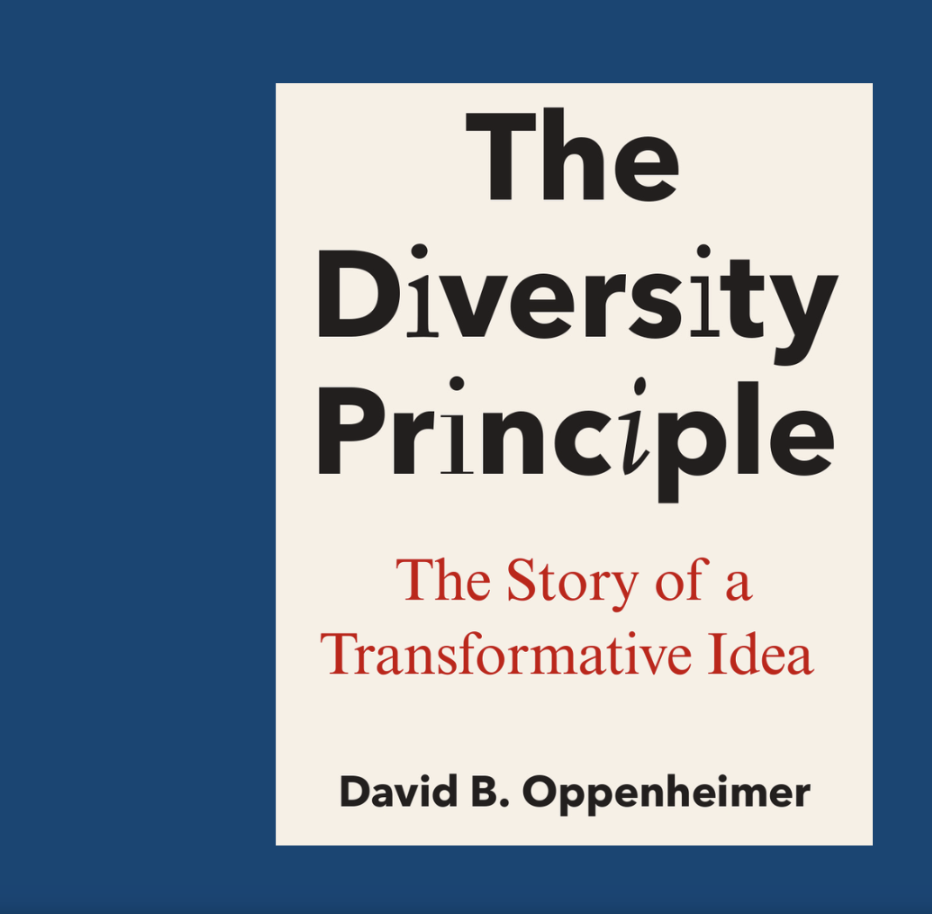
The Diversity Principle's European Roots
The Diversity Principle: The Story of a Transformative Idea (Yale 2026) tells the 200+ year history of the idea that people with different backgrounds, experiences, and viewpoints benefit from engaging with each other. That is why it’s important for people who are insiders to expand their circles to include outsiders, and vice versa. The experience of being an outsider is often influenced by age, religion, ethnicity, gender, race, language, disability, economic class, and other forms of identity. When compared with groups that are more homogeneous, diverse groups do a better job of solving problems, making discoveries, teaching and learning from each other and improving democratic discourse.
Commonwealth Club World Affairs - The Diversity Principle: The Story of a Transformative Idea
As the war on diversity upends government, corporate and education policies, the history of the idea of diversity has never been more important. David Oppenheimer, a diversity skeptic turned diversity admirer, chronicles how diversity became a foundational value of higher education over the last 200 years, how it evolved as it was adopted by commerce and science, and what the implications are of the current backlash.

Berkeley Political Review - David Oppenheimer on the Importance of Diversity & the War on DEI
With the recent suppression of DEI initiatives by the Trump administration and a war on diversity, Berkeley Law professor David Oppenheimer sits down with BPR to detail how his new book, “The Diversity Principle,” traces the long, often-overlooked history of diversity efforts, and reminds us why inclusion remains essential to learning, growth, and democracy itself.

The Gist - David Oppenheimer: “Diversity Is Not About Being Comfortable”
Today on The Gist, the profound failure of empathy within our immigration bureaucracy is put under the microscope following the tragic freezing death of Nurul Amin Shah Alam, a blind Rohingya refugee abandoned in a Buffalo parking lot by Border Patrol. Then, UC Berkeley law professor David Oppenheimer joins the show to discuss his book, The Diversity Principle: The Story of a Transformative Idea. He traces the intellectual history of multiculturalism back to 1810 Prussia, arguing that a clash of perspectives is essential for institutional excellence, leading into a spirited debate over the replication crisis in social science and the institutional flaws of the modern DEI apparatus.

Gifts for every reader: New books by UC Berkeley authors
Whether you’re shopping for a die‑hard fiction lover or a policy wonk, this year’s collection of new books by the Berkeley community is as wide‑ranging and surprising as ever.

Texas Public Radio - Does DEI Make America Great?
In his first week in office, President Trump issued a series of executive orders targeting diversity, equity, and inclusion programs across federal agencies, contractors, and, by extension, the private sector, framing them as "illegal discrimination.”

The Hill - Let’s Not Throw the DEI Baby out With the Bathwater
Conservative attacks on diversity, equity and inclusion accelerated sharply following the Supreme Court’s 2023 decision ending the use of race in admissions in higher education. Writing for the majority, Chief Justice John Roberts declared that the educational benefits of diversity are not “sufficiently coherent” to pass constitutional muster.
Stanford Social Innovation Review - The Story of a Transformative Idea
On the last day of October 2022, as the Supreme Court heard challenges to the admissions policies at Harvard and the University of North Carolina, Justice Clarence Thomas said he was “flummoxed” by the very idea of diversity. “I don’t have a clue what it means,” he declared.
Forbes - Diversity Is a Principle, Not A Trend
During a time when the word “diversity” has been tossed around as a political talking point, Berkeley Law Professor David B. Oppenheimer is doing something necessary: he is insisting that we dig deep into history.
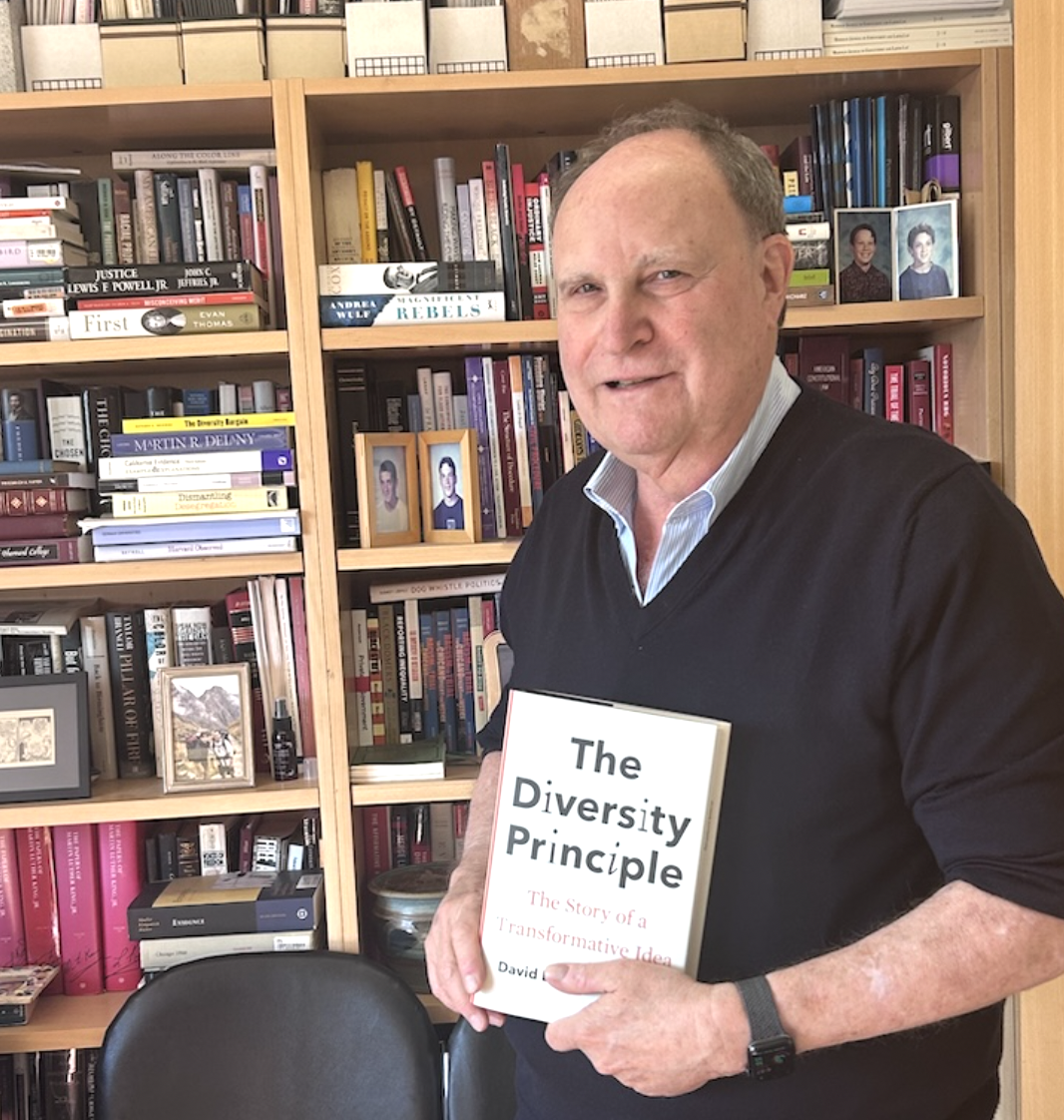
Piedmont Profile | ‘Diversity Detective’ David Oppenheimer
Is the diversity movement purely ideological? Does it arise out of partisan political ambitions, a Trojan horse in the hands of ethnic minorities and the dispossessed as part of a selfish quest to seize greater power, wealth, and status? Or is it a nuanced socio-political perspective with deep academic and historical roots, and aspirations reaching toward some universal social good?

The Roundtable - 'The Diversity Principle: The Story of the Transformative Idea' by David Oppenheimer
The new book ‘The Diversity Principle: The Story of the Transformative Idea’ David Oppenheimer gives a 200-year history of diversity in education, science, and commerce. The debate of diversity upends our current government, education policies, and corporate world, the idea of diversity has never been more important. Oppenheimer also shows how over a 200-year period diversity evolved and how it was adopted in science and commerce.

The Washington Post - A ‘Free Trade of Ideas’ in Colleges? Good.
Readers on intellectual diversity and Section 702 of the Foreign Intelligence Surveillance Act.