
Media Appearances

The Diversity Principle, The Marketplace of Ideas, and the "Brandeis Brief" with Professor David Oppenheimer
This week on Studying Law Around the World Podcast, I have the incredible privilege of hosting Professor David Oppenheimer. Professor Oppenheimer is a clinical professor of law at UC Berkeley, the faculty co-director of the pro bono program, and the director of the Berkeley Center on Comparative Equality and Anti-Discrimination Law.

Keen On America - Why Different Minds Are Great
“Great minds think alike? It’s completely wrong. It’s not that great minds think alike; it’s that different minds are great.” — David Oppenheimer
The Gist - David Oppenheimer: “Diversity Is Not About Being Comfortable”
Today on The Gist, the profound failure of empathy within our immigration bureaucracy is put under the microscope following the tragic freezing death of Nurul Amin Shah Alam, a blind Rohingya refugee abandoned in a Buffalo parking lot by Border Patrol. Then, UC Berkeley law professor David Oppenheimer joins the show to discuss his book, The Diversity Principle: The Story of a Transformative Idea. He traces the intellectual history of multiculturalism back to 1810 Prussia, arguing that a clash of perspectives is essential for institutional excellence, leading into a spirited debate over the replication crisis in social science and the institutional flaws of the modern DEI apparatus.
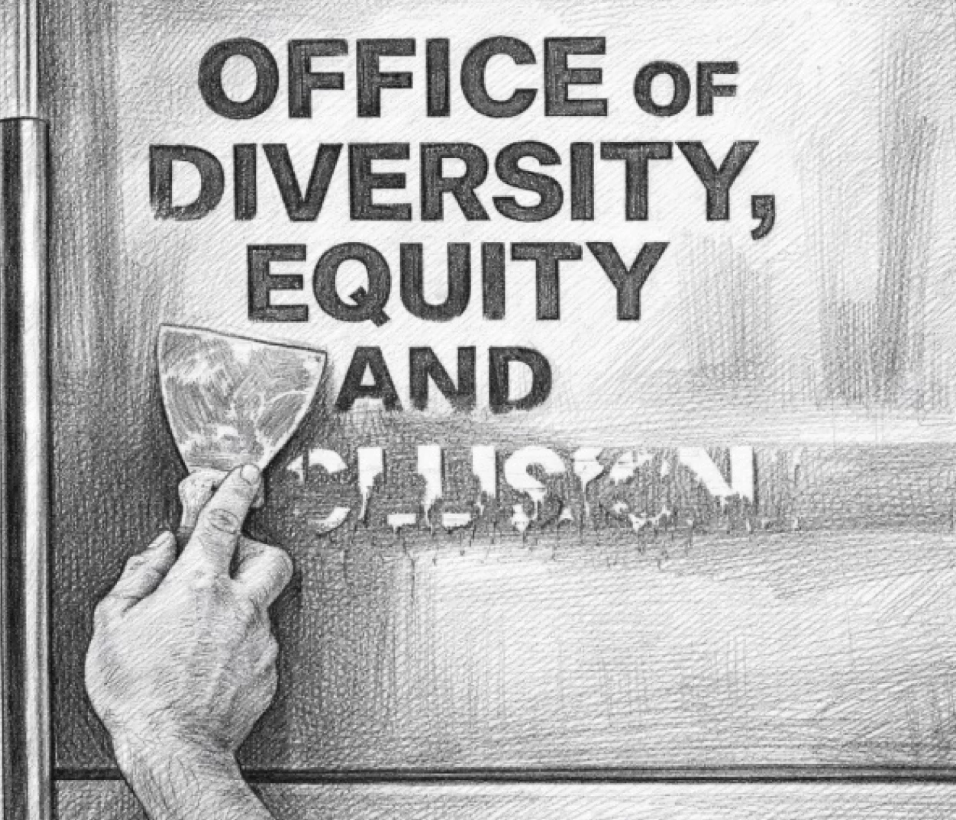
Texas Public Radio - Does DEI Make America Great?
In his first week in office, President Trump issued a series of executive orders targeting diversity, equity, and inclusion programs across federal agencies, contractors, and, by extension, the private sector, framing them as "illegal discrimination.”

The Roundtable - 'The Diversity Principle: The Story of the Transformative Idea' by David Oppenheimer
The new book ‘The Diversity Principle: The Story of the Transformative Idea’ David Oppenheimer gives a 200-year history of diversity in education, science, and commerce. The debate of diversity upends our current government, education policies, and corporate world, the idea of diversity has never been more important. Oppenheimer also shows how over a 200-year period diversity evolved and how it was adopted in science and commerce.

WNYC - Diversity’s Long History
David B. Oppenheimer, clinical professor of law at the University of California, Berkeley, co-director of the Berkeley Center on Comparative Equality & Anti-Discrimination Law and the author of (Yale University Press), argues that the idea that there is value in diversity in education and politics has a long history, and that attacks on the concept today are misguided.


#RaceClass Podcast — David Oppenheimer Talks Diversity, Pauli Murray & the Fight Against American Apartheid
Justice Clarence Thomas doesn't know what "diversity" means. UC Berkeley Law Professor David Oppenheimer does. David joined the #RaceClass Podcast to discuss his new book "The Diversity Principle." The book traces the diversity principle's long and circuitous (and often overlooked) history -- one that weaves through John and Harriet Mill, the legendary Pauli Murray, and fights for academic freedom in the United States and against Apartheid in South Africa.

America Trends - Diverse Schools and Workplaces Perform Better. There’s Science Behind It.
There was a time when our guest was a diversity skeptic. He actually believed that Justice Clarence Thomas’s thinking on the matter had some validity. Then he began to explore the history of the concept and became a true admirer of the benefits that diversity brings to academic settings, the workplace, science laboratories and all manner of activity. From that he began a thoughtful examination of the science behind the benefits of having previously excluded groups as part of the conversation and decision-making process. And while some argued that simply by using the Socratic Method of challenging convention you could get enough diverse opinions, he began to recognize, as other scholars like Wilhelm von Humboldt and John Stuart Mill did in the 19th century and Charles Eliot, Archibald Cox and Lewis Powell did in the 20th century, that you actually needed people with different backgrounds and life experiences to provide the rich diversity of thought that resulted in better scholarship and outcomes. America’s adaption of diversity in action over the last 50 years seemed to suggest we understood that, so now why the backsliding? We discuss this all today with Berkeley law professor, David Oppenheimer. He is the author of the new book, “The Diversity Principle: The Story of a Transformative Idea.”

BITE Radio - The Diversity Principle with Professor David Oppenheimer
In the book The Diversity Principle, Professor Oppenheimer shows how this principle contributed to the framing of the rights of freedom of speech and academic freedom, and played an important role in the Civil Rights Movement, the Women's Rights Movement, and the Disability Rights Movement.

The Dirty Word of Diversity
Aaron and Dr. Clardy dig in on the current war on progress with professor and author of the new book, "The Diversity Principle: The Story of a Transformative Idea," David Oppenheimer.
The Tavis Smiley Podcast - KBLA 1580
David B. Oppenheimer, Berkeley Law Professor and author of the new text, “The Diversity Principle: The Story of a Transformative Idea,” lays out the rise - and fall - of DEI in America.

The SAVE Act Showdown: Professor David B. Oppenheimer on Diversity and Democracy
Episode 85 opens by drawing a clear line between traditional voter ID laws — which most Americans already support and easily satisfy — and the SAVE Act’s stricter requirement for documentary proof of citizenship. The hour unpacks the political, constitutional, and logistical stakes of that shift, framing the bill as a national fight over access, federal power, and who ultimately gets to participate in American democracy. The hour concludes with an interview featuring Prof. David B. Oppenheimer, a Clinical Professor of Law at Berkeley Law and one of the world’s leading scholars on discrimination, civil rights, and comparative equality law. He is the author of The Diversity Principle: The Story of a Transformative Idea, a sweeping historical and legal examination of how diversity became a defining framework in American public life.

What We Lost When Diversity Became Politics
Diversity has become a political weapon—but what if it was never meant to be political at all? UC Berkeley law professor David Oppenheimer argues in our conversation that diversity is an intellectual principle, not a moral slogan or corporate checkbox. Drawing on history, law, and hard science, he explains why diverse perspectives drive better thinking—and how the idea got lost along the way.